


Remembering the Dinnington Colliery: A Tribute to Old Boys and Their Legacy

Updated: Feb 19
The story of Dinnington Colliery is one of hard work, community spirit, and resilience. For decades, the colliery was more than just a workplace; it was the heart of a community where generations of miners and their families built their lives. Today, the Dinnington Colliery Memorial Wall and Statue stand as a powerful tribute to all Men and Women who worked at the Colliery and the legacy they left behind. This post explores the history of the colliery, the significance of the memorial, and the ongoing efforts by the Dinnington Colliery Old Boys to keep the memory alive.

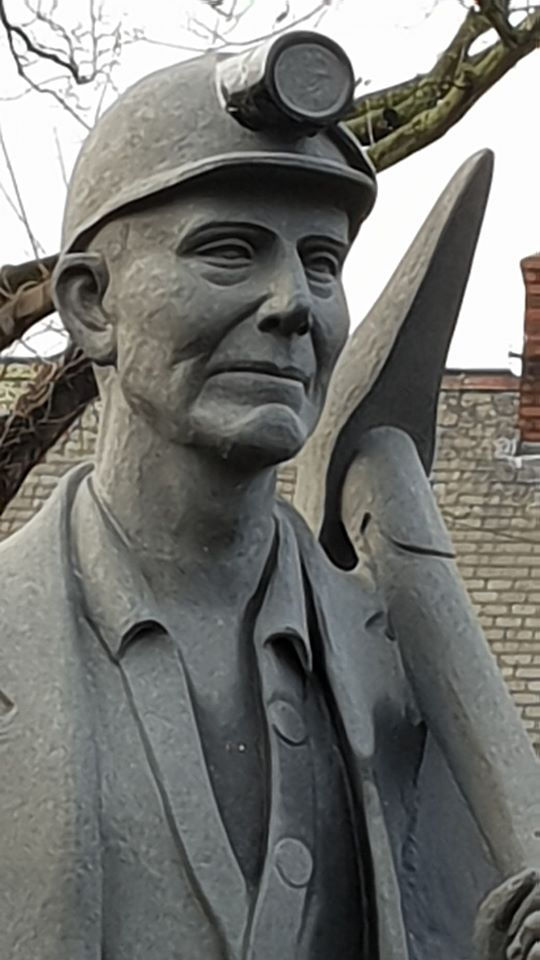
"Dinnington Colliery Memorial Wall and Statue honouring miners", "A view of the memorial wall and statue dedicated to Dinnington Main Colliery 1902 - 1992
The History of Dinnington Colliery
Dinnington Colliery opened in the early 20th century, becoming a major employer in South Yorkshire. The colliery provided jobs for hundreds of men, many of whom came from mining families. The work was tough and dangerous, but it created a strong bond among the miners and their community.
Opening and Growth
The colliery began operations in 1905 and quickly expanded. It was known for its deep shafts and extensive coal seams, which supplied coal to power industries and homes across the region.
Community Impact
The colliery shaped the village of Dinnington. Housing, schools, and social clubs grew around the mine, creating a close-knit community. Miners and their families shared a common identity centred on their work and mutual support.
Challenges and Closure
Like many coal mines in the UK, Dinnington Colliery faced economic pressures and changing energy demands. The mine closed in 1992, ending nearly a century of coal mining in the area. The closure left a void in the community but also sparked efforts to preserve its history.
The Memorial Wall and Statue
The Dinnington Colliery Memorial Wall and Statue were created to honour the men and Women who worked at the colliery and those who lost their lives in mining accidents. The memorial serves as a place of reflection and remembrance for families, friends, and visitors.
Design and Symbolism
The memorial features a stone wall engraved with the names of miners and a statue depicting a miner in traditional gear. The statue captures the strength and determination of the men who faced the dangers of underground work daily.
Location and Accessibility
Situated in the village centre, the memorial is easily accessible to the public. It acts as a focal point during remembrance events and community gatherings.
Annual Commemorations
Each year, the community holds ceremonies at the memorial to remember those who worked at the colliery. These events bring together former miners, their families, and local residents to share stories and honour the past.
The Role of the Dinnington Colliery Old Boys
The Dinnington Colliery Old Boys is a group formed by former miners and their descendants. Their mission is to preserve the history of the colliery and support the community connected to it.
Preserving History
The Old Boys collect photographs, documents, and personal stories to create a rich archive of the colliery’s history. They organize exhibitions and talks to educate younger generations about the mining heritage.
Supporting Families
The group provides a network for former miners and their families, offering social events and support services. This helps maintain the strong community ties that mining once fostered.
Fundraising and Maintenance
The Old Boys actively raise funds to maintain the memorial wall and statue. Their efforts ensure the site remains a dignified and well-kept tribute for future visitors.
The Legacy of Dinnington Colliery Today
Though the colliery closed decades ago, its legacy continues to shape Dinnington. The memorial wall and statue are symbols of respect and remembrance, reminding everyone of the sacrifices made.
Education and Awareness
Local schools include the history of the colliery in their curriculum, helping students understand the importance of mining to their community’s development.
Community Identity
The mining heritage remains a source of pride. Events and reunions organized by the Old Boys keep the spirit alive and connect generations.
Inspiration for Future Generations
The stories of resilience and hard work inspire young people to value their roots and contribute positively to their community.
The Dinnington Colliery Memorial Wall and Statue stand as a lasting tribute to the men and Women who shaped the village through their labour and spirit. The dedication of the Dinnington Colliery Old Boys ensures that this legacy will not fade. Their work preserves not only the memory of the miners and all those who worked at the colliery, but also the strength of a community built on shared history and respect.
Get in touch with the Dinnington Colliery Old Boys at the below address
Foreword
Every time I look at the Miners' Memorial Wall and Statue (Charge), I think back to how
it all began.
Sitting at home, one day minding my own business, the phone rang; it was
Mick Robinson. He said he had a plan, but then so did Baldrick! Mick's plan was for a
Dinnington Miners' reunion. A good idea, but neither of us had the foggiest idea how to
organise it so I put out a cry for help and luckily there were others who thought it was a
great idea.
From this, Dinnington Colliery Old Boys was formed. The founding members
were: Myself, Mick Robinson, Alan Wheldon, Andy Milner, Jimmy Simmonds, Brian
Lewis, Rae Robinson and my wife Pat Smith was persuaded to come on board to organise
us and do the paperwork. The group later welcomed Ollie Roberson, Paul Scholey and
Gary Cruickshanks on board.
After a couple of other reunions, it was decided that we should build a memorial to the
Men & Women who had worked at Dinnington Colliery. Little did we know how much
work we were taking on and how long it would take us to reach our goal. To raise the
money to fund the build we held fund raising evenings, sold memorabilia at tabletop sales,
held street collections and placed collection boxes in shops and pubs. However, we soon
realised that it would take us far too long to raise enough money this way, so we decided
to apply for grants from various organisations.
We applied to the Tesco Bags of Help scheme and the Co-op Local Community Fund and
were lucky to be accepted by both. We will also be eternally grateful to John Staggs from
London Bridge ASLEF (railway workers) who had a badge struck which was sold to raise
money towards the memorial. He then put a motion forward, at one of their branch
meetings, to ask for donations from other branches, we were absolutely amazed when
forty-four branches sent cheques raising a total of over £2000. Also, our sincere gratitude
goes to Pat Smith, who spent many hours filling out forms for successful applications to
other organisations such as The Freshgate Trust and the AVIVA Community Fund, but
the one that "got us over the line" was her brilliant application to the Heritage Lottery
Fund without which, we would still be fund raising now.
Of course, we needed somewhere to place the Memorial and Dinnington St John's Town
Council agreed to let us build it in Coronation Park. Our Architectural Designer, Shayne
Martin, helped us to decide a design and guided us through all the red tape necessary.
Beecroft Memorials were our stonemasons, and we thank Brian for all his help and advice.
We also thank our builder, Kevin Kavanagh, who built the wall and placed the paths
around the Memorial.
On the day of the unveiling, we were impressed by the amount of people who turned out to
finally see what all the work had been about. Our oldest living miner, Pat McAnespie and
his wife kindly unveiled the statue for us, Bernadette Nos (daughter of the last man killed
at Dinnington), and Jayne Hudson (sister of the second to last man killed at Dinnington)
unveiled the plaque and laid a wreath at the Memorial Rose Garden.
Dinnington Colliery Band played "Working Man" and "The Miners' Hymn" and a few tears
were shed on hearing these.
The names on the wall bear witness to how much the miners are thought of by the people of
Dinnington and the number of names exceeded our expectations. Finally, I want to pay
tribute to all our members, past and present, and to you, the people of Dinnington for
making our dream a reality.
Times change and things move on
But when the last miner is gone
His name will remain on the wall
Dave Smith
Chairman,
Dinnington Colliery Old Boys

The Memorial Wall
We had to find a site in the Town to place the Memorial, initially we had
planned to just have a statue and amongst the places mentioned were close to
the Church at the top of Laughton Road/Church Lane and near to where the
Colliery was on Outgang Lane. During these discussions a memorial wall was
mentioned along with the statue. Coronation Park was the only suitable place
in which to site a Memorial Wall and Statue as the Colliery Winding Wheel
was already in the Park.
Dinnington St John's Town Council were approached to see if they would
allow us to build a Memorial Wall and Statue on Coronation Park as they own
the Park. At the Council Meeting on 8th May 2017 it was passed that
Dinnington Colliery Old Boys could place the Memorial Wall and Statue in
Coronation Park.
We began the process of building the wall by employing an architectural
designer who came to Coronation Park site and from that visit designed the
wall and produced the drawings (Plates 29-33 overleaf) that were needed to be
sent to Rotherham Borough Councils Planning Dept in order for us to gain
Planning Permission to be able to site the Wall and Statue.
We determined early on that the two sides of the wall would be called The
Stute Side (facing The Resource Centre (and site of the "Stute)) and The Pit
Side (facing South Street (and beyond that where the Colliery was sited).


Comments